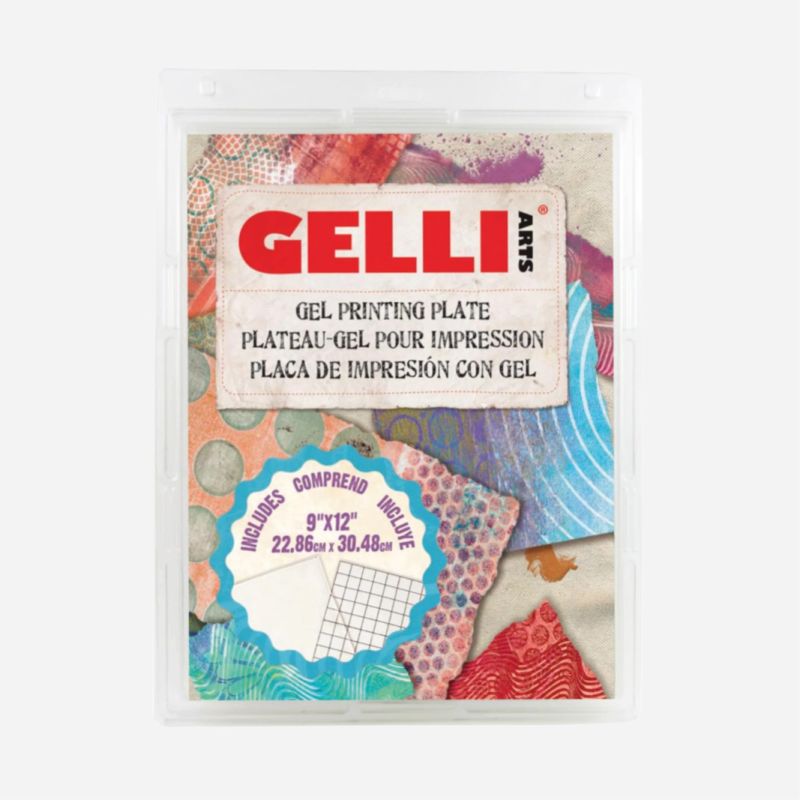
Gel printing plates have become an essential tool for artists, crafters and textile printers looking to achieve rich, layered prints with minimal setup and tools. A gel printing plate provides a reusable, non-toxic surface that makes mono-printing and pattern transfer accessible to all skill levels - from classrooms and hobbyists to professional textile designers. Durable yet forgiving, these plates let you create vibrant prints on paper, fabric, cards and other materials without the need for complex equipment.
The flexibility of a gel plate allows for experimentation with colour, texture and layering techniques. Unlike traditional printing presses, gel plates require only basic inks, paints or dyes and simple tools like brushes and rollers to produce striking results. Whether you’re building unique textile patterns or exploring mixed-media artwork, gel printing plates offer a dynamic and intuitive way to bring creative ideas to life.
Reusable soft-gel surface for mono-printing and texture transfer
Non-toxic and easy to clean after use
Works with acrylics, textile inks, dyes and other printing mediums
Flat, flexible printing plate adapts to different substrates
Durable and resilient under repeated use
Ideal for layered and mixed-media effects
Suitable for beginners and experienced printers alike
Compact and portable for classroom or workshop use
What surfaces can I use a gel printing plate on?
Gel printing plates can be used on paper, canvas, fabric and other flat substrates, making them versatile for textiles, fine art and craft projects.
Do I need a printing press to use a gel plate?
No - gel plates are designed for hand printing and do not require a press; simple tools like rollers (brayers), brushes and your hands are all you need.
What types of ink or paint work best on a gel printing plate?
Acrylic paints, textile inks, fabric paints and specially formulated gel plate inks all work well; choose compatible mediums based on the surface you are printing on.
How do I clean and care for my gel printing plate?
Clean the plate with warm water and a soft cloth or sponge immediately after use; avoid harsh abrasives and store flat in a cool, dry place to maintain performance.
Can gel plates be used for layered and multi-colour prints?
Yes - gel plates excel at layering multiple colours and textures in a single print, enabling rich, complex effects with ease.
How They Work / Are Used:
A gel printing plate is used by applying ink or paint directly onto its surface with a roller, brush, stencil or other mark-making tools. Once the colour is laid down, patterns and textures can be added before a piece of paper, fabric or other material is pressed onto the plate. After a few seconds of contact, the substrate is lifted to reveal the transferred image. Because of the gel’s slightly tacky surface, it holds colour well, capturing fine details and subtle textures. Multiple layers can be printed in succession to create depth and complexity in a single piece of work.
Ideal Use / Application:
Creating unique patterns on textiles such as scarves, t-shirts and fabric panels
Monoprinting on paper for cards, journals, collage and prints
Adding texture and colour to mixed media art and sketchbooks
Classroom art activities and creative workshops
Surface design for craft projects and small-batch handmade items
Exploring layering techniques with inks, paints, stencils and masks



 Secure checkout
 Free UK Delivery over £125
 Next day delivery available