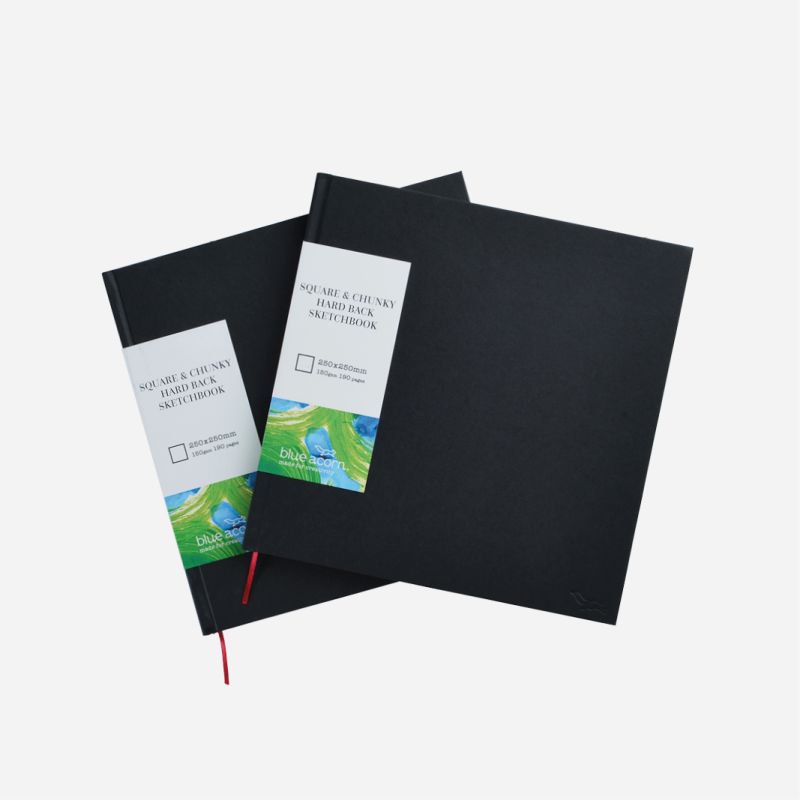
Casebound sketchbooks provide a sturdy, professional-quality workspace for artists, designers, and students. The hard cover protects artwork, while high-quality paper ensures smooth, reliable performance for pencil, pen, and light wet media. Their durable construction makes them suitable for classroom use, studio practice, or fieldwork.
A hard cover sketchbook allows artists to experiment with techniques across pages without worrying about damage, making it ideal for sketching, journaling, and portfolio work. Its rigid structure supports layering, annotations, and creative exploration, giving users a reliable and long-lasting artistic companion.
High-quality, smooth paper suitable for multiple media
Lay-flat design for easy sketching across spreads
Durable binding for repeated use
Ideal for classroom, studio, or travel use
What makes a casebound sketchbook different from a softback sketchbook?
Casebound sketchbooks feature a rigid cover that protects artwork and supports heavier use compared to flexible softback options.
Can I use pencils, pens, and light watercolour in these sketchbooks?
Yes, the high-quality paper handles a range of dry and light wet media effectively.
Are professional sketchbooks suitable for classroom use?
Absolutely, their durable construction and reliable pages make them suitable for students and educational settings.
Do the pages lay flat for working across spreads?
Yes, the binding allows the sketchbook to open fully, making it easy to work across two pages.
Can casebound sketchbooks be used for portfolios?
Yes, the professional-quality paper and hard cover make them ideal for storing and presenting finished artwork.
How They Work / Are Used:
Artists and students open the hardback sketchbook and work on individual pages or spreads using pencils, pens, markers, or light wet media. The rigid cover provides support when drawing or writing on the go. Pages can be layered with sketches, notes, and practice exercises without tearing or warping. The durable binding ensures the book remains intact, allowing it to serve as a record of creative progress over time.



 Secure checkout
 Free UK Delivery over £125
 Next day delivery available